Written and directed by Holly Janem, Language of Life is a tender short film set in the stillness of a quiet graveyard, where an unexpected bond forms between two women at opposite ends of life. Through a conversation that transcends age and experience, the film delicately explores the complexities of grief. I had the chance to sit down with Janem to talk about the story behind the film and the emotions that shaped it.
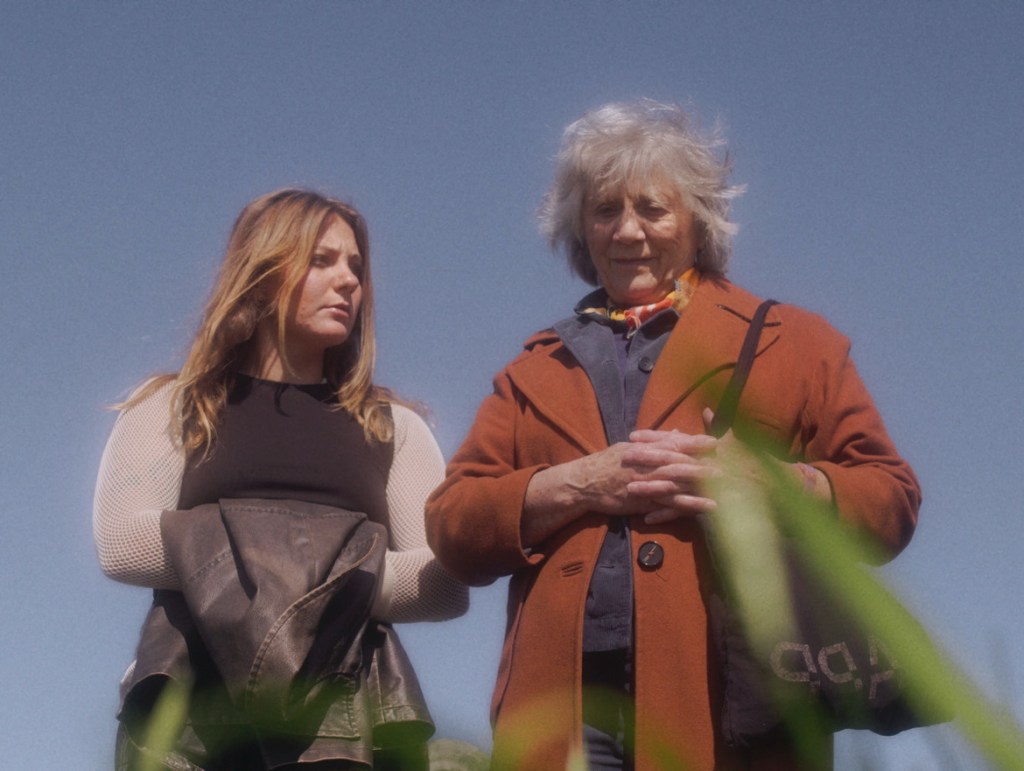
Janet Amsden and Rebecca Horne in Language of Life. Courtesy of Holly Janem.
I really love the portrayal of grief in the film; it’s a really important topic and one I am very familiar with. What drew you to the story, especially through the relationship of your two leads?
“What drew me to this story was that I think I was quite lucky growing up; I didn’t really experience grief, and it wasn’t really on my radar. Really, it was just something that happens when you’re older, and especially the idea of losing a parent. It was never something I thought about, and I never really wanted to think about it. And then I had a friend when I was about 16 who lost her mum, and that was like, wow. It just hit home that it can happen to you, and you can lose a parent, a close family member or a close friend at any time. There’s no stage of life where that’ll happen specifically.
And then, when I started to get a bit older, my dad got unwell when I was about 21 and he’s better now, but, at that time, it was the first time I’d ever had to confront the fact that it’s something that happens, and there is no set time that’ll happen for you, and it might happen when you’re unprepared. Definitely, at that point in life, I was very unprepared. And it really got me thinking, because by that point, I’d had a few more friends who had lost parents and people close to them. And, I would look at them, and their lives were different, but their lives were still happening. And I would think, how are they doing that? I struggled so much with the idea of my dad being unwell, and the fact that that almost happened and didn’t for me, and the fact that I was lucky enough to be in a position where he got better. But I would look at my friends who were going through that and think they just live their lives, they’re still living, and they’re not letting that stop them. And I thought, what would I want to hear?
Another thing I’ve realised through this process, and also just through seeing other people deal with it, is that, especially in young people, it’s a very taboo topic, and it’s quite stigmatised. And it was something that I didn’t realise was stigmatised until I would feel a bit awkward talking about it. Or when my dad was particularly ill. I don’t know what I’m supposed to say to people, but I’d like to talk about it. But then also wanting to be there for friends that had gone through similar things, it’s sort of like, how do you bring that up, and when is it appropriate? And how do you let them know that you’re there for them without maybe saying it at the wrong time and upsetting them? Just watching that kind of thing unfold really made me realise it was something that I wanted to channel into that, because, when those conversations do come up, it can be quite healing if it’s in the right circumstance.”
And was there any decision made about having an age gap between the two leads?
“I didn’t do this on purpose, but it kind of happened. But there’s a lot of myself in Rebecca’s character and Lyla, and I think one day, if I’m lucky enough, I will be older, and I will have gone through these things that I was so scared of at the time, what would I like to feel about that? And then me at the time, it was like, Well, what would I like to hear? And it just kind of made sense to have that sort of dynamic of people on either end of the stages of life.”
Continuing on from that, what message did you want audiences to take from this film?
“I would really like people to feel not upset, but hopeful when it ends. Acknowledging that things like this will happen, and you’re going to lose people in your life, and grieve. But it doesn’t mean your life has to stop. Your life can still go on, and they can still be a part of that.
Weirdly, I don’t really like public speaking, and when we did our film screening, I wasn’t nervous to go up and talk. It was more the idea of people watching the film. I was like, ‘I’m really quite nervous for people to see this, because what if we’ve represented this completely wrong?’ But luckily that didn’t happen.”
It’s interesting you say that, because everyone grieves in different ways, and I really like the messaging about how grief presents itself in different people, like when one of the characters was talking about being scared to move to University because of what she’s leaving behind. What was the inspiration behind those speeches? Was it something where you got advice from other people, or did it come from the heart?
“At the time I wrote the script, I was quite isolated. I wrote it around the time stuff was happening with my dad, and then I put it away. I was at a stage where I didn’t like looking at things I had made. And then when I had gone travelling for a bit, I had gotten back, and I saw that Screen Cornwall and the BFI were looking for scripts, and I wanted to submit something, and the one I had that fit the criteria and that was ready to go was that one. I was sort of like, Okay, I’m going to have to let other people see it and send that off.
But I think the first draft was definitely focused on how I would’ve felt. Because I went travelling when my dad got better, and I thought, I don’t know if I would’ve done that if the other outcome had happened. Would I have let that stop me? Maybe I would’ve for a couple of years, or maybe I wouldn’t have. I obviously don’t know. But I think that maybe I would’ve felt that anyway, part of growing up and coming of age, where you have to go off and do your own thing, can come with a lot of grief sometimes. So I think that line in particular is definitely the feeling of ‘my life is going to change, and I want it to’, but also there’s a weird guilt around this stage of life that this character is in.
And then a lot of Marion’s lines came from what I wanted to hear. But as we revised the script, there was definitely input from other people. So I would say, Amber Amare and Rhiannon Jenkins, who are our DP and editor. They had gone through similar things around the time of production, and they actually both said it was quite a cathartic experience. We allowed them to say ‘I don’t want to do this anymore’, but they brought a new light to it and influenced the story in further drafts. Also, when Rebecca Horne and Janet Amsden came on set, they made it their own as well. So it was a process which started quite solitary, but the final production was very collaborative.”
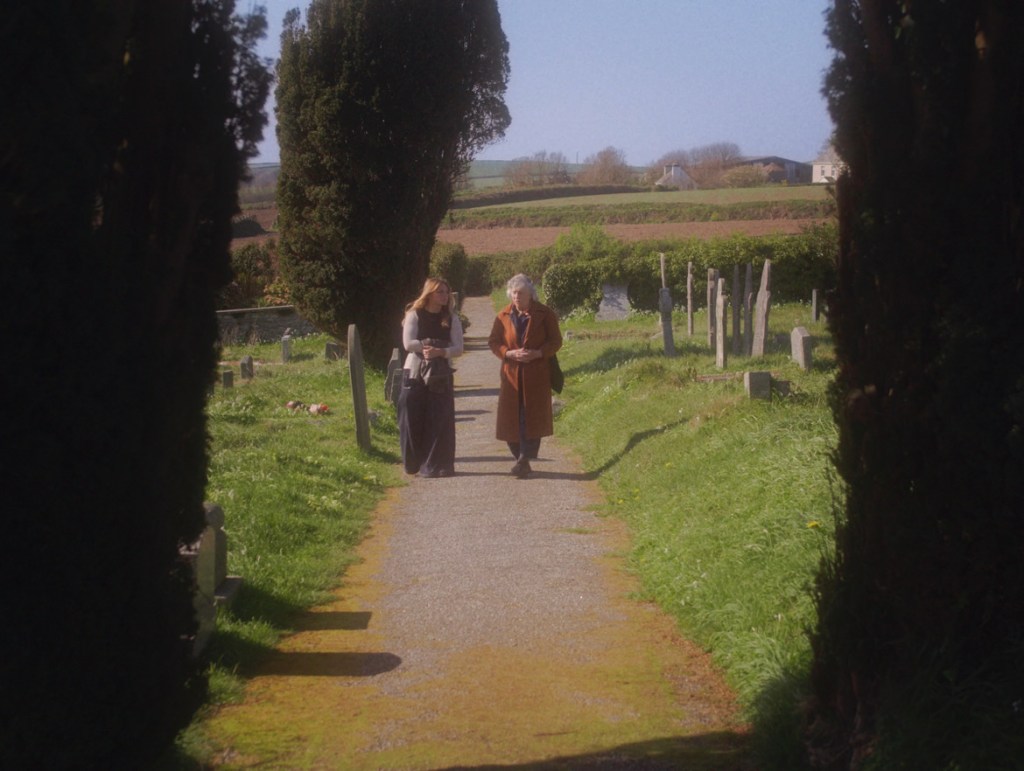
“I would really like people to feel not upset, but hopeful when it ends.”
The cinematography is very dreamlike and ethereal. I wondered if any decisions went into how it looks?
“I’m glad you think that, it’s definitely what we were going for. Amber is so amazing, she’s so talented, and she very much had a vision for it from the early drafts that she read. She was one of the first people we brought on, and we actually realised that we had worked together before. I followed her on Instagram because I thought she was amazing, and she said ‘Look, I’m really packed, but send me the script’ and she came back and said ‘I’d really like to work on this, and I can see it already.’ And when I saw her first shot list, it was just so brilliant.
What we really tried to do is let each department have its own influence on it, and from what she said in her perspective of why it was shot like that, we wanted it to feel nostalgic and comforting and deliver the message softly. Sometimes the media around grief can be quite harsh, whereas I think our cinematography brings a softer angle to it.”
And, as a film lover yourself, were there any influences from other directors or films that you used in this film?
“Definitely, whenever I do anything, my subconscious influence is definitely Greta Gerwig; she is the first woman I ever saw doing what I wanted to do. I was a little bit young for Sofia Coppola to be a big thing. So, when I decided I wanted to work in this industry, and my mum took me to see Lady Bird and I saw the credits I was like ‘Oh my God, it was made by women, that’s so cool women are doing this’ because up until that point, I had always loved film but it was always men in the driving seat. So Lady Bird is definitely a big influence, especially when writing a character of a similar age who’s a little bit defiant and someone who isn’t always vulnerable. My producer, Libby [Gibbons], always refers to one of the first things I put on the mood board, which was that she’s a Y2K Urban Outfitters Baddie, and when I met Rebecca, I was like, okay, she literally is. But the original thought process was someone who isn’t often vulnerable, and I definitely took influence from Lady Bird because of that. She’s not the conventional 17-year-old.
Another influence that came after we’d written the script was The Holdovers (Alexander Payne), which was a big visual influence and was on the moodboard a lot. The idea of having two generations at different stages of life and seeing how they interact, I thought that film was amazing, showing how you can build relationships with people generationally. Aftersun (Charlotte Wells) was also on my mind when writing it, because the film tackled grief subtly and interestingly, and I thought about it for a long time after – they were probably the big three.
Definitely visually as well, I put a lot of Sofia Coppola on there, because I loved Priscilla. Another film that had a visual influence was How to Have Sex (Molly Manning Walker), which felt like a vlog, like I’m with those people, and that was a big thing I wanted to emulate because I’d not directed narrative before, and I think we really got that.”
I’m a massive fan of scores, and I think they’re so important to films. What was the process of creating the score for your film, and were there any influences that went into it?
“The score was created by my friend Jack, with whom I went to school. He’s really talented and started writing music with his girlfriend Marnie, who is one of my close friends, so it came about naturally. The score wasn’t something we had to think about urgently, but I had Jack written down, and I thought I’d ask him but I didn’t know if it was something he’d do but one day I had a text from Marnie saying that they really wanted to get into the film world and asking if there was someone they can do a score for. She knew we were doing a film, but assumed we were already sorted. I was like, ‘Actually, we’re not sorted, do you want to jump on a meeting?’ We had the meeting the same day and sent them the script, and they asked if we had any influences, so I sat and made a playlist that night, and within a week, Jack had basically drafted up the score.
I had sent them the whole album, but especially the song Nomad by Clairo, and I said I’d really like it to emulate this. I also had put the Lady Bird soundtrack on there, some Lana Del Rey, The Last Showgirl, a little bit of the Normal People one there, and Bones and All was on there too. But because the film is so short, we couldn’t have a really big score or for it to be a music video. So it was sort of just where certain notes will happen as you’re watching the film, in certain moments, almost like a motif – The Virgin Suicides did that quite well. It’s something we discussed that you can listen out for, not overpowering, but it’ll be there in certain moments. I loved that process because music is such a big part of my life.”
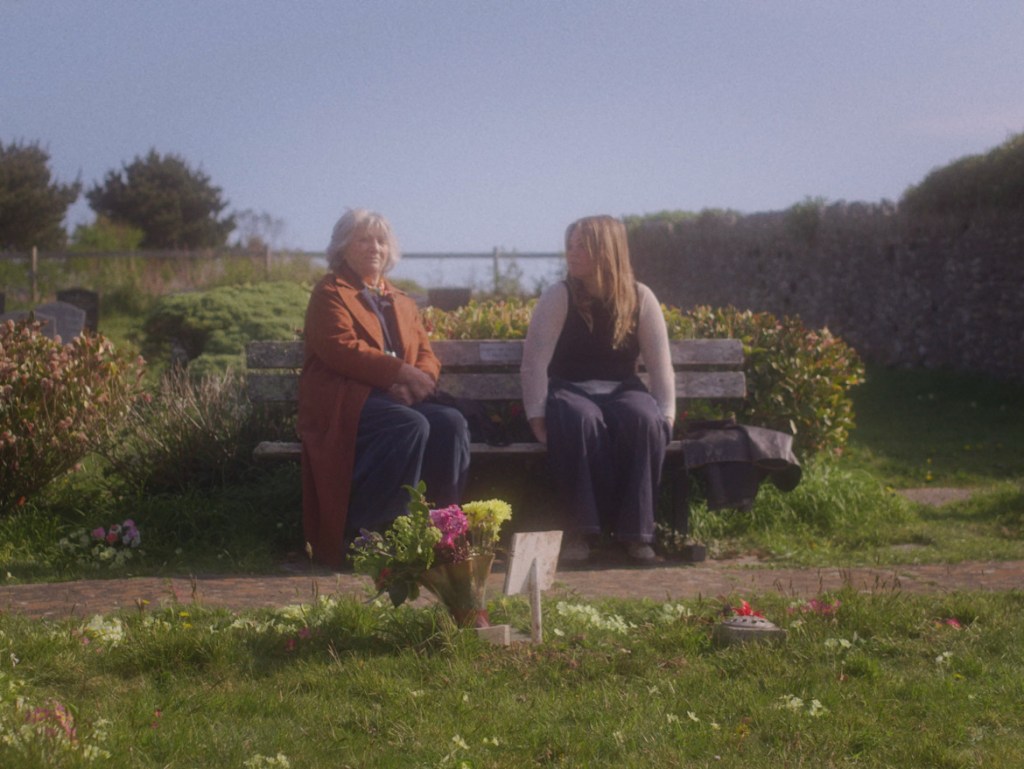
“We came together and made something that is now resonating with audiences, and that’s a really big thing.”
Is there something that you’re especially proud of with the whole film?
“Overall, bringing so many people together was really lovely. It was probably my favourite thing about the whole process. I went to university in Cheltenham, so most of my network was based there, and I was only going to move home temporarily, but this opportunity came up, and I stayed longer than I had planned. It was so amazing, and I didn’t know many people in the Cornwall film scene. When Libby was brought on, the friendship I developed with her was so amazing and fulfilling, something I didn’t know I needed.
I’m also really proud of the environment on set; it didn’t feel cliquey, which I was worried about, but it was an environment where everyone wanted to talk and get to know each other. We all went to the pub after we wrapped, and no one wanted to leave. I’m proud to have fostered an environment like that because I’ve definitely been on my fair share of sets where it’s uncomfortable. But we all came together and made something that a lot of us were really passionate about. We came together and made something that is now resonating with audiences, and that’s a really big thing.”
And is there anything you’ve taken away from the process that you’ll use in future creative endeavours?
“Definitely, that’s a similar thing to making sure that it’s an environment where people can be comfortable. I mean, something that Emily, our first AD, did in the mornings was like we did meditation and breathing exercises, and it made such a difference. That’s what I’d really like to bring on future projects, the idea that we’re all going to get on, and everyone’s here to do the same thing. And especially because of the nature of the film we were making, you had to be allowed to be vulnerable. And there were a few times in the day when we were very open. Or if things are getting a bit overwhelming, just tell us, and then we can have a break. And a few times, people did say that, and I was glad that people are comfortable enough to vocalise that they need a break and that it’s getting a bit much. But that’s something that I would like to do in the future, which is make sure that that’s the number one priority. The number one priority isn’t getting the shot, but that everyone feels safe and comfortable. Also, just like the idea that you just got to put yourself out there a bit more, like, I think this wouldn’t have happened if I hadn’t just dug up this piece of work that makes me feel vulnerable.”
The final question is one I always like to ask in interviews, because I think cinema is so important. What is your favourite cinema to go to?
“See, that’s such a good question, because I’ve not explored cinemas enough. I want to go to London a lot more; I’d love to go to the Prince Charles. I’ve never been there. I grew up as, like, a Vue girl. Vue was the only cinema we had for miles, and I don’t know what my favourite cinema would be. I don’t know if it counts, but I do love going to see stuff at Festival Hall [London Film Festival]. The atmosphere in there is so different.
I went to the Everyman recently for the first time. But you know what I liked more than that? I went to the Picturehouse for the first time. It was so comfy, but it also felt like an old school cinema. I liked that balance. I would definitely say the one that’s got the most nostalgia and memories and stuff is like, Vue Plymouth. But that’s definitely one I’ve been to the most, just because it’s the closest. And then I would say, I do quite like, weirdly, it’s not comfy, and the screen is small. But Odeon Exeter, I do like a trip there, I think, because when I go there, it’s because I’m going up to see my friends and we’re going to see something together.”
You can watch Language of Life here:
 rosie reviews